by Amandine
Is TikTok Rewiring Learning? Or Just Exposing What Was Already Broken?
General
General
Teachers are searching how to catch students cheating with ChatGPT while students search how to hide it. Discover the irony behind AI driven cheating and how LiveCase offers a better path forward for learning and integrity.
There are moments when Google Analytics feels less like a dashboard and more like a digital gossip train. Sitting side by side in our dashboard's search queries were two eerily similar phrases:
“How to catch students cheating with ChatGPT”
And
“How to hide ChatGPT during exam”
Our data reveals these common two eerily similar queries. One from educators, one from students. Each asking the internet for help, just from opposite sides of the classroom. Different objectives. Same anxiety. And a quiet admission that everyone is struggling to keep up.
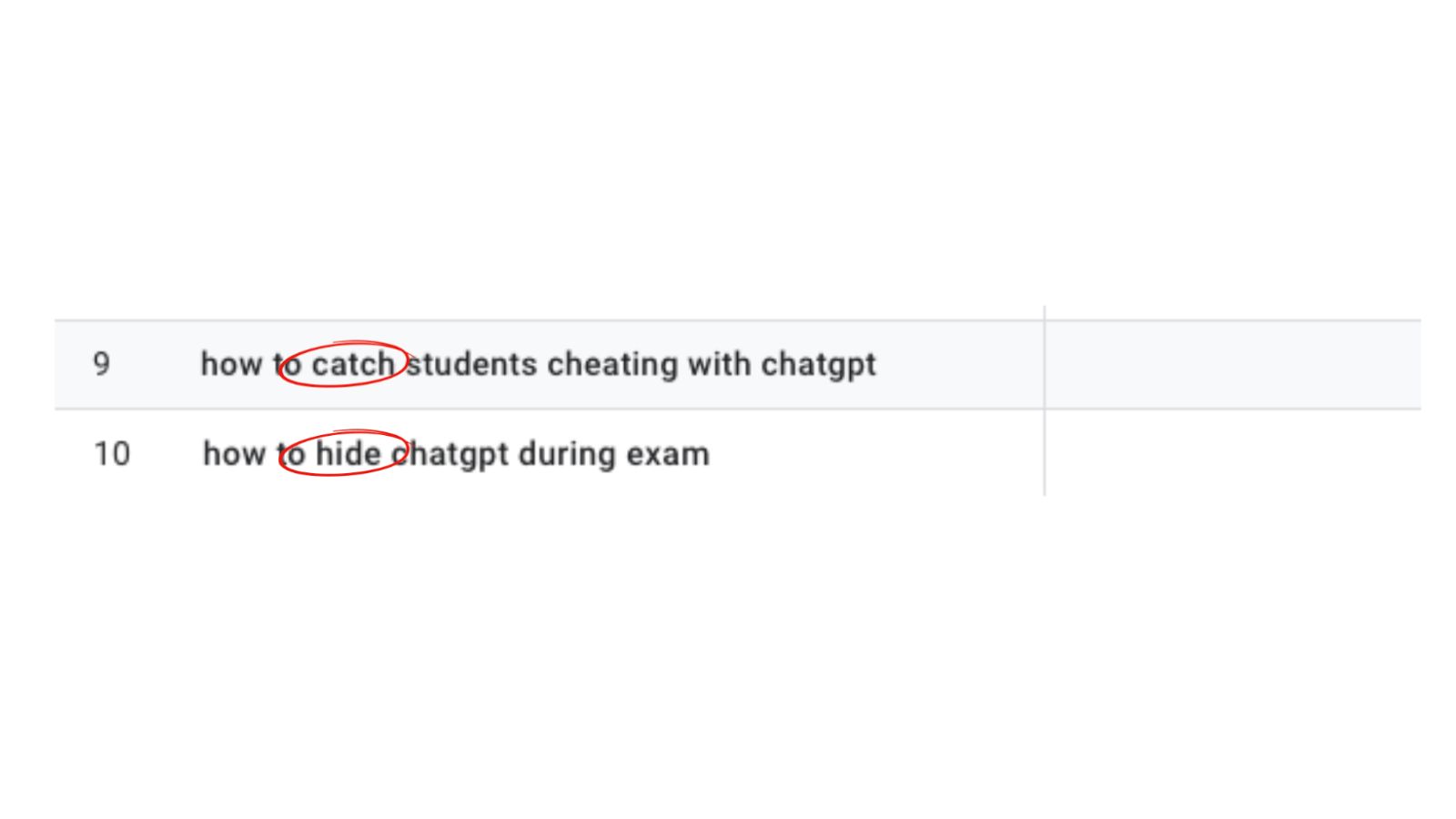
This is the quiet arms race playing out across higher education. Instructors search for detection tools, monitoring software, and enforcement strategies. Students search for workarounds, paraphrasing tricks, and ways to avoid being flagged. Everyone is spending time trying to outsmart each other instead of improving learning. Both of them end up on the same page. AI has not broken education. It has exposed where assessment design was already fragile.
Traditional assignments make this problem inevitable. Essays, take home exams, and static case studies are easy to outsource to AI. When the task is predictable, AI becomes tempting. When the task can be completed without thinking, students will find a way. When the only response is surveillance, students respond with evasion. Nobody learns. Everyone loses.
Instead of asking how to catch cheating or how to hide it, there is a more productive question. How do we design learning experiences where cheating is unnecessary and ineffective? That question shifts the focus from punishment to pedagogy. And that is where meaningful change begins.
LiveCase approaches the problem from a different angle. It is an interactive platform where students move through a case by making decisions, responding to characters, and navigating consequences in real time. There is no static document to upload. There is no single answer to generate. The experience unfolds based on the student’s choices. Because students must progress through the case step by step, ChatGPT cannot complete it for them.
LiveCase is not something a student submits. It is something they participate in. They interact with AI driven characters inside a structured simulation. Each decision changes what happens next. The path is unique. The timing matters. The context shifts. There is nothing to paste into an AI tool and ask for a solution.
Cheating fails because the learning happens in motion, not on a page.
LiveCase also removes the need for constant suspicion. Educators can see how students progress through the case. They can observe decision patterns, timing, and interaction quality. They can see how students engage with AI characters and where they struggle or excel. This is insight, not surveillance. It supports teaching rather than enforcement.
LiveCase does not ban AI. It uses it intentionally. AI enhances character realism, feedback, and reflection. Students engage with AI within the simulation, but they remain responsible for decisions. AI becomes part of the learning process, not a shortcut around it. This is the difference between AI replacing thinking and AI supporting it.
The irony of those Google searches tells us something important. Both teachers and students are reacting to the same broken system. The solution is not better detection or better hiding. The solution is better design. When assessments require judgment, interaction, and consequence, cheating stops being useful.
The fact that teachers and students are Googling opposite sides of the same problem is funny, but it is also revealing. It shows that the current approach is unsustainable. LiveCase offers a different path. An interactive platform where students do not need to cheat with ChatGPT because the learning is dynamic and decision driven, and where educators gain insight into how students think rather than how they evade. When AI is used thoughtfully and pedagogy comes first, everyone stops fighting the system and starts learning again.
To see how existing interactive case simulations change this dynamic, explore here.
Why are teachers and students both searching about ChatGPT cheating?
Because both groups are reacting to the same pressure. Educators are trying to protect academic integrity while students are trying to navigate unclear rules and high stakes assessments. The overlap shows a system problem, not a people problem.
Does banning ChatGPT actually stop cheating?
No. Bans usually push AI use underground rather than eliminating it. When assessments remain predictable, students will continue looking for shortcuts regardless of the rules.
How does LiveCase prevent students from cheating with ChatGPT?
LiveCase is an interactive platform where students progress through a case by making decisions in real time. Because the experience is dynamic and decision driven, there is no static prompt or answer that ChatGPT can generate on a student’s behalf.
Can students still use AI inside LiveCase?
Yes, but thoughtfully. Students interact with AI driven characters within the simulation. AI supports realism and feedback while students remain responsible for decisions and outcomes.
What can educators actually see during a LiveCase activity?
Educators can track student progress, decision paths, timing, and how learners interact with AI characters. This provides insight into thinking and engagement rather than relying on detection or surveillance.
Is LiveCase suitable for exams or graded assessments?
Yes. Because the learning happens through interaction and decisions rather than submitted text, LiveCase is well suited for both formative and summative assessment where integrity matters.
What is the biggest takeaway from the ChatGPT cheating paradox?
The problem is not AI itself. The problem is assessment design. When learning requires judgment, interaction, and consequence, cheating becomes ineffective and unnecessary.

When students skip PDFs and disengage, LiveCase turns learning into a sequence of decisions, consequences, and active participation.
Trusted by world-leading educators & corporations
Author: Amandine
Amandine believes learning isn’t a straight path but a creative, evolving experience.With a Master’s from Trinity College and a Bachelor’s from Leeds University, she helps shape how LiveCase tells its story.Connecting innovation, design, and AI to transform how people learn and engage.Driven by curiosity and a belief in better ways to educate, she brings both strategy and imagination to every project.
Published: 1/26/2026
Related posts
Is TikTok Rewiring Learning? Or Just Exposing What Was Already Broken?
Is the PDF Dead? The Way Students us it Has Changed.
5 Ways Executive Education Programs Use Immersive AI LiveCases to Build Crisis Leadership Skills
What Does Experiential Learning Actually Mean in Business Education?
5 Prompting Techniques for Building Powerful AI Chatbot Interactions in LiveCases
5 AI Education Tools Transforming Higher Education
5 Reasons Viral Trends with LiveCases Instantly Engage Your Students
Why PDF Case Studies Are Dying: Preventing AI Cheating With Immersive Experiences