3 Powerful Reasons Vinho Rio Global Wine Strategy Changes How Students Learn International Business
International business has never been more important to teach. Yet it has arguably never been harder to teach well.
Students can access information instantly. They can summarize frameworks in seconds. They can even generate sophisticated analyses with AI tools before class begins.
But understanding strategy and making strategy are two very different things.
This challenge sits at the heart of modern business education. Educators want students to move beyond memorizing concepts and toward developing judgment. They want learners to wrestle with uncertainty, evaluate competing priorities, and make decisions when there is no obvious answer.
That is precisely why experiences like Vinho Rio Global Wine Strategy matter.
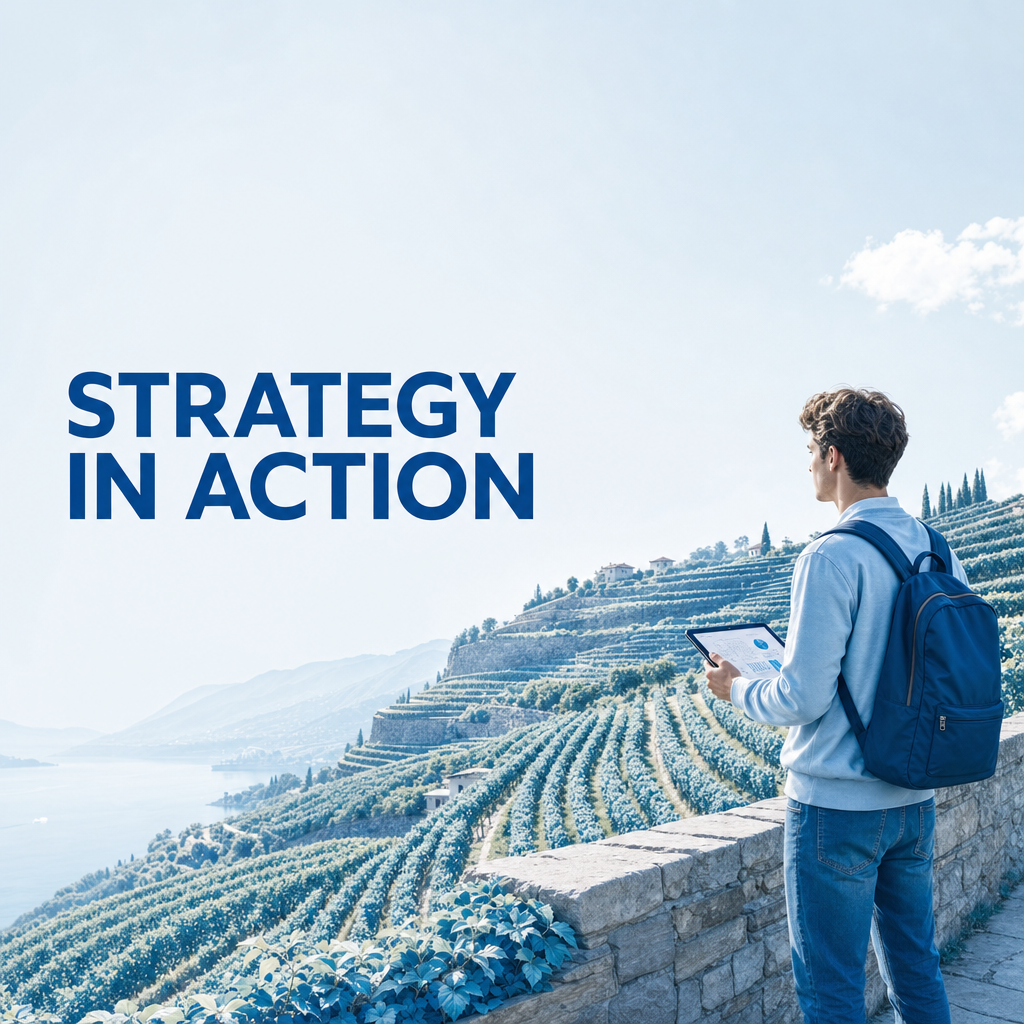
Developed by INSEAD and delivered through LiveCase, Vinho Rio places students inside a family-owned vineyard in Portugal's Douro Valley as it faces a critical growth decision following an unexpected opportunity from an American investor. Students must navigate questions of globalization, expansion, market entry, and brand identity while managing the trade-offs that come with growth.
Rather than simply reading about international business, students experience it.
The result is a learning experience that extends the traditional case method while remaining grounded in rigorous business education.
Why Traditional Global Strategy Teaching Faces New Challenges
For decades, case studies have been one of the most effective ways to teach business.
The best cases encourage discussion, critical thinking, and analytical reasoning. They help students understand how real organizations navigate difficult decisions.
However, the learning environment has changed dramatically.
Today's students are surrounded by tools that make information easier than ever to access. While this creates opportunities, it also introduces challenges.
Many educators are finding that:
- Students often focus on extracting answers rather than developing reasoning
- Classroom discussions can become predictable
- Participation is often uneven across a cohort
- It can be difficult to assess how students actually think
- AI makes it easier to bypass parts of the learning process
The issue is not that business cases no longer work.
The issue is that the format needs to evolve alongside student behaviour.
This is where Immersive AI LiveCase experiences provide a compelling alternative.
By placing students directly inside the decision-making process, they transform learning from observation into participation.
1. Students Learn Global Strategy Through Decisions Rather Than Frameworks
Frameworks are essential.
They provide structure, language, and analytical tools that help students understand business problems.
However, real strategic decisions rarely arrive neatly packaged inside a framework.
Leaders must make decisions amid uncertainty. They balance financial goals against cultural considerations. They consider short-term opportunities while protecting long-term value.
Vinho Rio creates an environment where students must actively apply strategic thinking.
Throughout the experience, learners explore issues such as:
- Global expansion opportunities
- International market selection
- Market entry modes
- Heritage brand management
- Strategic growth decisions
These concepts are not presented as isolated theories. They emerge naturally through the decisions students make.
As a result, learners gain a deeper understanding of how strategy operates in practice.
This reflects one of the core principles behind experiential learning.
People learn strategy most effectively when they are required to use it.
2. Students Experience the Reality of Uncertainty
One of the most valuable aspects of international business education is helping learners understand uncertainty.
Unfortunately, many classroom activities remove much of that uncertainty.
Students are often given complete information, ample time, and the benefit of hindsight.
Business leaders rarely enjoy those advantages.
Global expansion decisions involve ambiguity.
There are questions about:
- Consumer demand
- Competitive threats
- Market conditions
- Regulatory environments
- Brand positioning
Vinho Rio places students directly into this reality.
As they navigate the story, every decision has consequences. Different choices create different outcomes, ensuring that no two learning journeys are exactly the same. Live scoring and cohort comparisons further reinforce engagement and reflection.
This uncertainty creates meaningful learning opportunities.
Students begin to recognise that effective leadership is not about finding perfect answers.
It is about making informed decisions despite incomplete information.
That lesson extends far beyond international business.
It prepares students for the realities of leadership itself.
3. Students Become Active Participants Instead of Passive Observers
Perhaps the greatest strength of experiential learning is that it demands participation.
Traditional learning environments often rely on a small percentage of students driving discussion while others remain relatively passive.
Interactive simulations change this dynamic.
Every learner must engage.
Every learner must make decisions.
Every learner must reflect on outcomes.
Within Vinho Rio, students are not spectators watching a company expand internationally.
They become part of the decision-making process.
This shift produces several important benefits:
| Traditional Case Learning | Immersive AI LiveCase Learning |
|---|---|
| Students analyse decisions | Students make decisions |
| Participation varies | Participation is required |
| Outcomes are fixed | Outcomes evolve through choices |
| Learning is often retrospective | Learning occurs in real time |
This is particularly valuable in large classes where maintaining engagement can be difficult.
Because every student interacts directly with the experience, educators gain greater visibility into participation and decision-making. LiveCase provides instructors with insights that help support more meaningful feedback and debrief discussions.
The result is a more inclusive and effective learning environment.
Why Vinho Rio Represents the Future of Experiential Learning
The most effective innovations in education do not replace proven teaching methods.
They strengthen them.
Vinho Rio does not replace the case method.
It extends it.
Students still encounter a rich business scenario. They still evaluate strategic trade-offs. They still participate in classroom discussion and reflection.
The difference is that they experience the challenge firsthand.
This aligns closely with the philosophy behind Immersive AI LiveCase.
Pedagogy comes first.
Technology serves the learning objective.
Students develop judgment because they are required to exercise it.
That is particularly important in an era where information is abundant but thoughtful decision-making remains rare.
For educators looking to increase engagement, deepen participation, and strengthen strategic thinking, experiential learning provides a powerful path forward.
If you're interested in exploring similar experiences, check out our existing pages on the Catalogue.
If you have your own teaching materials, explore Create Your Own LiveCase.
If you'd prefer support from our team, discover our Studio Services.
You can also learn more about the platform on the LiveCase homepage.
For broader insights into experiential learning and business education, the AACSB provides valuable research and resources at https://www.aacsb.edu.
Frequently Asked Questions
What is Vinho Rio Global Wine Strategy?
Vinho Rio Global Wine Strategy is a 90-minute interactive global strategy simulation that places students inside a family vineyard's international expansion challenge.
Who is Vinho Rio designed for?
The experience is suitable for undergraduate, MBA, executive education, and corporate strategy programs.
What topics are covered in the simulation?
Students explore globalization, market entry strategies, international expansion, heritage branding, resilience, and strategic decision-making.
Can the experience be delivered online?
Yes. Vinho Rio can be delivered online or in person and can be completed individually or in teams.
How does Immersive AI LiveCase support learning?
Immersive AI LiveCase places students inside realistic business scenarios where they must actively participate, make decisions, and reflect on outcomes.
Can educators create their own simulations?
Yes. Educators can build their own experiences using LiveCase or work with our Studio Services team to develop custom simulations.
Conclusion
International business is ultimately about decisions.
Not simply theories.
Not simply frameworks.
And certainly not memorising the right answer.
Experiences like Vinho Rio Global Wine Strategy help students bridge the gap between understanding strategy and practicing it. By placing learners inside realistic international business challenges, the experience develops judgment, engagement, and confidence in ways that traditional content alone cannot achieve.
As higher education continues to evolve, the most effective learning experiences will be those that move students from observing decisions to making them.
That is where experiential learning excels.
And that is why Vinho Rio represents such a valuable addition to the modern business classroom.
Share

Transform static learning intoimmersive AI simulations.
When students skip PDFs and disengage, LiveCase turns learning into a sequence of decisions, consequences, and active participation.
Trusted by world-leading educators & corporations
Author

Author: Amandine
Head of Marketing
Amandine believes learning isn't a straight path but a creative, evolving experience.With a Master's from Trinity College and a Bachelor's from Leeds University, she helps shape how LiveCase tells its story.Connecting innovation, design, and AI to transform how people learn and engage.Driven by curiosity and a belief in better ways to educate, she brings both strategy and imagination to every project.
Published: 6/23/2026