5 Proven Strategies for Preventing AI Cheating: The Ultimate Guide for Business Schools (2025 Edition)
Preventing AI Cheating: A Comprehensive Guide for Modern Business Schools
As AI tools rapidly evolve, preventing AI cheating has become a top priority in higher education. Business schools, in particular, face a new reality where students can generate polished essays, solve cases, and even simulate expert analysis instantly. Traditional take-home assessments no longer measure real understanding. Preventing AI cheating is not only about academic integrity. It is about protecting the value of a business degree. Employers expect graduates to think critically, analyze ambiguity, and make decisions in real time. To prepare students for the real world, educators must design assessments that AI tools cannot complete. This guide outlines five highly effective strategies, culminating in the strongest approach available today. These methods work across undergraduate programs, MBA cohorts, and executive education.
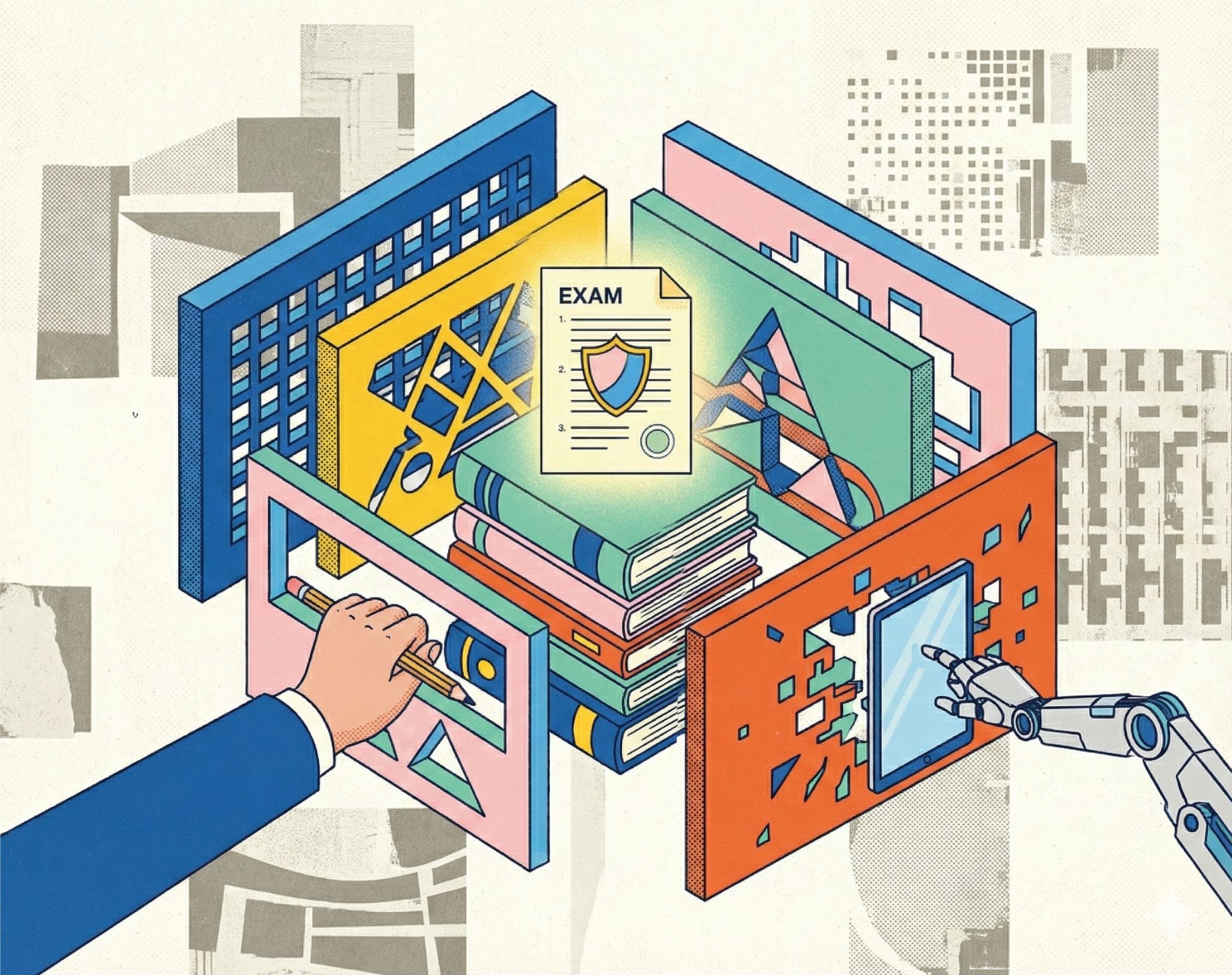
Why Preventing AI Cheating Matters in 2025
AI-generated text has created new vulnerabilities in business education. Large language models can instantly produce structured, professional, and accurate responses to nearly any written assignment. This creates several risks:
• Students can submit work that does not reflect their own thinking.
• Instructors struggle to differentiate authentic reasoning from AI output.
• Case study submissions become nearly identical in structure and language.
• Critical thinking becomes optional for students who outsource assignments.
If business programs want to develop real managerial judgment, assessments must evolve faster than the tools used to bypass them.
Common Assessment Types Most Vulnerable to AI
Some assignment formats are especially easy for AI to complete.
1. Generic Take-Home Essays
AI thrives at long-form writing. Prompts like “Explain the operations strategy” or “Analyze the leadership issue in this case” can be generated in seconds.
2. Template-Based Case Analyses
Standard MBA formats such as “Define the problem, list alternatives, evaluate and recommend” are predictable and easy for AI models to replicate.
3. Online Open-Ended Responses
Unmonitored reflections or asynchronous tasks can be entirely AI-generated without detection.
These weaknesses highlight why stronger assessment structures are necessary.
Strategy 1. Use Personalized and Contextualized Assignments
One of the simplest ways of preventing AI cheating is designing assignments that require personal relevance. AI models cannot recreate the lived experience or unique perspective of a student.
How to apply this strategy:
• Ask students to link course concepts to situations from their own work history.
• Use assignments that require analysis of a local company unfamiliar to global AI models.
• Incorporate real data from the current quarter or week.
• Require students to reference in-class discussions.
Personal detail creates natural friction for AI tools and increases authenticity.
Strategy 2. Require Multi-Step Critical Thinking
Most AI models struggle with layered reasoning that builds across stages. By breaking assignments into multiple steps, educators can see the student’s thought process more clearly.
Effective structures include:
• Sequential decision stages.
• Intermediate reasoning explanations.
• Documentation of how conclusions changed.
• Logic checks tied to earlier parts of the assignment.
This scaffolding forces students to demonstrate original thinking instead of delivering a polished but shallow final answer.
Strategy 3. Integrate Real-Time Peer Interaction and Debate
AI cannot replace spontaneous argumentation or collaborative decision-making. Live interaction reveals genuine understanding and exposes gaps that AI-generated text can hide.
Examples of this strategy:
• Synchronous debates on ethical dilemmas.
• Team decision challenges during class.
• Structured peer-to-peer case defenses.
• Small-group problem solving under time pressure.
Real-time engagement shows instructors whether students can articulate insights, defend their reasoning, and respond to challenge.
Strategy 4. Use Prompt Transparency and Process Checks
A practical assessment method for preventing AI cheating is requiring students to reveal their creation process.
Practical ways to apply this:
• Require draft submissions.
• Ask for short reflections on how the student approached the task.
• Collect notes or screenshots of planning steps.
• Ask why the student changed their mind between drafts.
These steps help instructors identify unnatural patterns associated with AI writing.
Strategy 5. Real-Time Decision Simulations
The strongest and most AI-resistant strategy
Real Time Decision Simulations such as LiveCase offer the most effective approach for preventing AI cheating in business school courses. These simulations place students in dynamic, high-pressure managerial situations where variables evolve as decisions are made. Students must react in real time, making it impossible to rely on AI-generated assistance.
LiveCase transforms traditional case studies into immersive interactive chat simulations, where students engage with virtual characters, face dilemmas, and uncover critical information under time pressure.
Because each decision alters the scenario, students cannot upload the simulation to general-purpose AI tools like ChatGPT to obtain a complete solution. The experience demands real thinking, not formulaic templates.
Why LiveCase is AI-proof:
• We work with AI instead of letting it to do all the work.
• Students chat with virtual characters, requiring real-time, authentic responses.
• Instant feedback such as “Great answer” or “Here’s what a seasoned executive might say” reinforces correct reasoning and reveals poor thinking.
• Scoring mechanics add urgency and motivate deeper engagement.
• The interactiveness prevents students from depending on AI to craft responses, since outcomes are unpredictable.
Why LiveCase enhances academic integrity:
• Prevents students from outsourcing responses, because content cannot be uploaded to AI tools.
• Ensures genuine engagement through real-time pressure, deadlines, and uncertainty.
• Provides instructors with real-time analytics and automated performance insights.
• Offers certainty of learning by showing exactly how students navigate dilemmas.
Flexible delivery options:
• Works on mobile, desktop, or laptop.
• Fits in-person, hybrid, or fully online learning environments.
• Can be used at any point within a course module.
• Supports synchronous and asynchronous pacing.
When preventing AI cheating is the goal, LiveCase’s combination of integrity, adaptability, and engagement fits the bill. It replaces passive reading with active decision-making and transforms the assessment into a performance, not a writing task.
Additional Best Practices for AI Integrity
• Redesign rubrics to reward original insight over polished prose.
• Use short oral defenses after major assignments.
• Provide core data only during class sessions.
• Assign multi-week tasks with staged unlocks.
• Add decision checkpoints that require justification.
FAQs About Preventing AI Cheating
1. What is the most effective method for preventing AI cheating in business courses?
Real Time Decision Simulations are the strongest solution because students make decisions live with no time to use AI.
2. Are AI detection tools reliable?
Not consistently. They can help but should not replace strong assessment design.
3. How do I make case assignments more AI resistant?
Use local companies, unpredictable variables, in-class data, and personal reflection.
4. Do oral defenses help?
Yes. Even brief verbal explanations reveal whether students understand their work.
5. Are group assessments more resistant to AI?
Yes, especially those requiring real-time collaboration.
6. Where can I find high-quality simulations?
A starting point is the LiveCase catalogue to view our existing simulations here.
Building Future Leaders with AI-Resilient Assessments
Preventing AI cheating is essential for preparing students for the complexity of modern business. Through personalization, multi-step reasoning, peer debate, transparency requirements, and especially Real Time Decision Simulations such as LiveCase, educators can ensure learning is authentic and skill development is real. These strategies help schools protect academic integrity while building leaders who can think strategically, adapt quickly, and make informed decisions under pressure.
Share
Transform static learning intoimmersive AI simulations.
When students skip PDFs and disengage, LiveCase turns learning into a sequence of decisions, consequences, and active participation.
Trusted by world-leading educators & corporations
Author
Author: Amandine
Amandine believes learning isn’t a straight path but a creative, evolving experience.With a Master’s from Trinity College and a Bachelor’s from Leeds University, she helps shape how LiveCase tells its story.Connecting innovation, design, and AI to transform how people learn and engage.Driven by curiosity and a belief in better ways to educate, she brings both strategy and imagination to every project.
Published: 12/1/2025