General
7 Powerful Reasons AI Templates Eliminate Blank Page Syndrome Without Replacing Educator Expertise
byAmandine
General

Educators are no strangers to hard work.
Designing meaningful learning experiences has always required expertise, judgement, creativity, and time. Whether you're building a case study, creating an assessment, designing a role play, or developing a classroom activity, the challenge often isn't knowing what to teach.
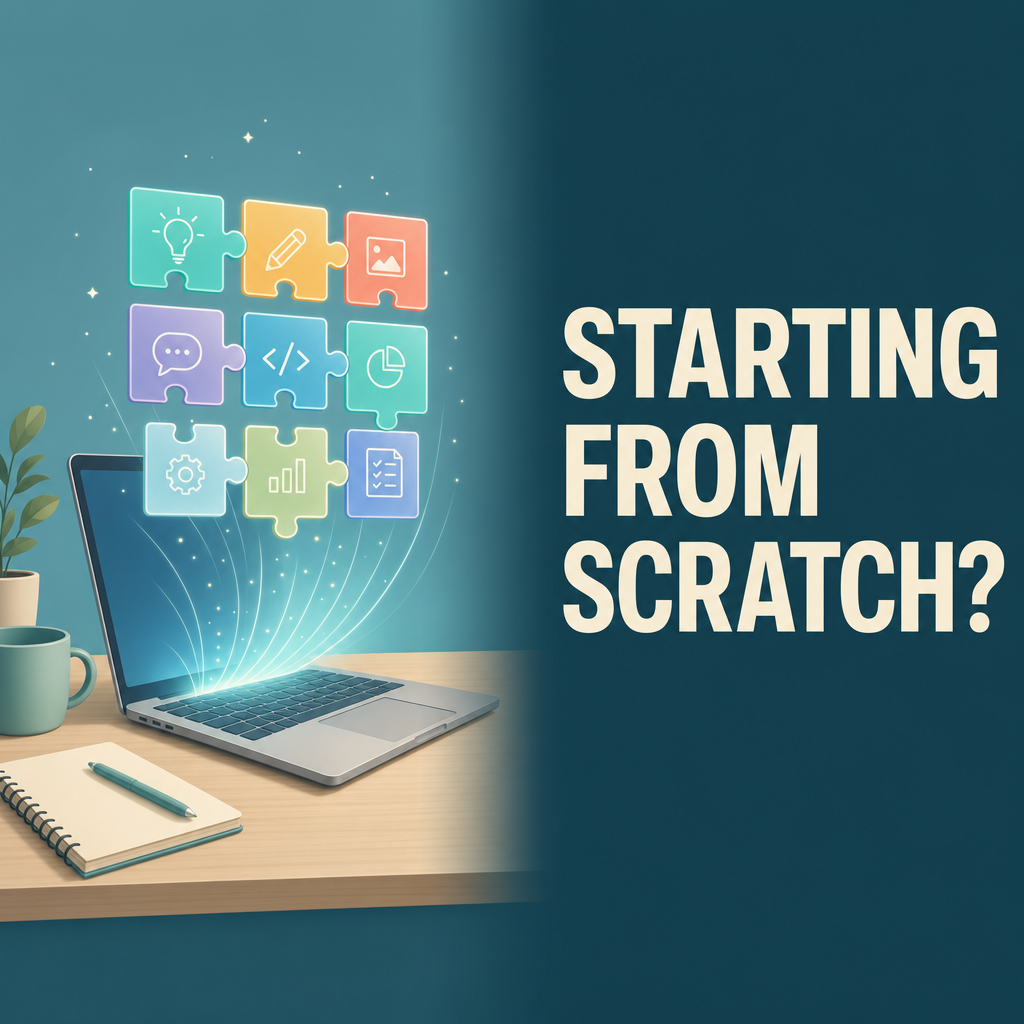
The challenge is getting started.
Many educators sit down with excellent ideas, detailed notes, years of teaching experience, and valuable source material. Yet turning those resources into a polished learning experience can feel overwhelming.
The blank page remains one of the biggest obstacles in education design.
This is where AI Templates are changing the conversation.
Not because they replace educators.
Not because they create perfect learning experiences in seconds.
But because they help educators move from an empty screen to a meaningful first draft in minutes.
At LiveCase, AI is designed to support educational expertise, not replace it. The goal is simple: remove friction from the creation process so educators can focus their energy on what matters most, making informed decisions about learning design. The platform's AI-assisted authoring process helps transform existing content into immersive learning experiences while keeping educators firmly in control of quality, direction, and outcomes.
Let's explore why AI Templates are becoming such a valuable tool for educators and why human judgement remains more important than ever.
Most educators do not struggle because they lack knowledge.
In fact, the opposite is usually true.
Many instructors have:
The problem is translating all of that expertise into a structured learning experience.
Starting from scratch can feel intimidating.
Questions quickly emerge:
These decisions require thought and expertise.
An AI Template doesn't answer every question.
Instead, it provides a starting point.
That shift can dramatically reduce the time required to move from idea to implementation.
One of the biggest misconceptions surrounding AI in education is that the technology is trying to replace educators.
Many headlines focus on automation.
Many technology vendors focus on speed.
The message often sounds something like this:
"Press a button and your course is finished."
Most experienced educators immediately recognise the flaw in that promise.
Quality learning experiences require human judgement.
AI can generate content.
It cannot fully understand:
Those decisions belong to educators.
The most effective AI tools recognise this reality.
Instead of attempting to replace expertise, they amplify it.
One of the greatest advantages of AI Templates is momentum.
Ideas are valuable.
Action creates learning.
Many excellent educational concepts never progress beyond notes, outlines, or conversations simply because time is limited.
AI Templates help bridge that gap.
Imagine starting with:
Instead of spending hours manually organising content into a learning structure, educators can quickly generate a draft framework.
That framework becomes something tangible.
Something that can be reviewed.
Something that can be improved.
Most importantly, something that exists.
The first draft often creates the momentum needed to complete a project.
A recent online discussion highlighted an important truth about educational AI.
One educator explained that while AI generated several hours of lesson content in minutes, they still spent hours reviewing, editing, and improving the materials.
Some might view this as a weakness.
In reality, it demonstrates exactly why educational quality remains strong.
Good educators review content because they care about:
The existence of review does not reduce the value of AI.
It highlights its proper role.
AI accelerates drafting.
Educators ensure quality.
The workflow changes from:
Create everything from scratch.
To:
Review and improve a strong first draft.
That distinction matters.
There is a common fear that AI reduces the importance of professional expertise.
In practice, the opposite often occurs.
The better the educator, the more effectively they can evaluate AI-generated content.
Experienced educators know how to identify:
AI Templates create possibilities.
Educators determine which possibilities deserve to remain.
Human judgement becomes the filter that transforms a draft into an effective learning experience.
Rather than replacing expertise, AI makes expertise more impactful.
Educational design involves countless decisions.
The strongest learning experiences rarely emerge from simply presenting information.
Instead, they encourage learners to:
This is particularly important in today's educational environment.
Students have unprecedented access to information.
What they need is not more content.
They need opportunities to apply knowledge.
LiveCase extends the traditional case method by transforming content into immersive experiences where learners actively participate in scenarios, engage with AI-powered characters, and make decisions within realistic situations. This shifts learning from passive consumption to active engagement.
AI Templates help educators begin building these experiences more quickly while maintaining complete control over the educational design.
Many educators face increasing demands on their time.
Teaching responsibilities often include:
| Responsibility | Time Requirement |
|---|---|
| Lesson preparation | High |
| Assessment creation | High |
| Student support | High |
| Administrative work | High |
| Curriculum updates | High |
Time spent wrestling with formatting, structure, and repetitive drafting tasks can reduce the time available for higher-value educational decisions.
AI Templates help automate some of the repetitive elements of creation.
This allows educators to focus on:
The goal is not to automate teaching.
The goal is to reduce unnecessary friction.
Many educators have innovative ideas.
Few have unlimited time.
This creates a challenge.
Institutions want:
Yet creating these experiences often requires significant effort.
AI Templates lower the barrier to experimentation.
Educators can test new approaches more quickly.
For example, an instructor might transform an existing case study into an Immersive AI LiveCase experience, allowing students to interact directly with simulated stakeholders rather than simply reading about them.
This creates opportunities for:
Check out our existing pages on the Catalogue to see examples of immersive learning experiences already being used by educators.
The most productive educational workflows are unlikely to be fully human or fully automated.
Instead, they will combine the strengths of both.
AI contributes:
Educators contribute:
Together, these strengths create a more efficient and effective creation process.
This collaborative approach is increasingly becoming the standard for educational innovation.
Educators remain the architects.
AI becomes the assistant.
Higher education is facing significant challenges.
Faculty members are being asked to:
The answer is not to reject AI.
Nor is it to hand complete control over to AI.
The answer lies somewhere in the middle.
Pedagogy must come first.
Technology should support educational goals rather than drive them.
This philosophy sits at the heart of Immersive AI LiveCase experiences, where AI supports decision-driven learning rather than replacing critical thinking. Students must engage with scenarios, navigate uncertainty, and make meaningful decisions that reflect authentic learning.
Educators who embrace this balanced approach often discover that AI becomes less about automation and more about amplification.
AI Templates are tools that help educators convert existing content, notes, or source materials into structured first drafts for learning experiences, assessments, activities, or simulations.
No. AI Templates provide a starting point, but educators remain responsible for reviewing, refining, and improving the final learning experience.
Yes. They can significantly reduce the time required to create an initial draft, allowing educators to focus on review and improvement rather than starting from scratch.
AI Templates can help structure content into interactive formats that encourage learners to engage, analyse, decide, and reflect rather than passively consume information.
Absolutely. Notes, lesson plans, articles, case studies, and workshop materials can often serve as starting points for AI-assisted creation.
Educators can start by using existing materials to generate an initial immersive learning experience. Check out how to build your own experience with Create Your Own LiveCase. If you'd prefer support, explore our Studio Services.
The conversation about educational AI often focuses on what machines can do.
A more useful question is what educators should continue doing.
The answer is clear.
Educators should continue making decisions.
They should continue applying expertise.
They should continue exercising judgement.
AI Templates do not eliminate these responsibilities.
They eliminate the blank page.
By transforming ideas into first drafts, AI Templates help educators spend less time wrestling with structure and more time shaping meaningful learning experiences.
That is where the real value lies.
Not in replacing expertise.
But in helping expertise move faster.
To learn more about the future of immersive, decision-driven learning, visit the LiveCase homepage.
Build your own simulation, bring in our Studio, start with a published case, or talk through your idea.
Ask about a demo, quote, or your simulation. We usually answer within a few hours.
Contact usCreate with AI or start from scratch. You keep full creative control.
Create an accountWork with our case writers on a classroom-ready simulation.
Explore StudioBrowse simulations authored with leading educators.
Browse catalogueAuthor: Amandine
Head of Marketing
Amandine believes learning isn't a straight path but a creative, evolving experience.With a Master's from Trinity College and a Bachelor's from Leeds University, she helps shape how LiveCase tells its story.Connecting innovation, design, and AI to transform how people learn and engage.Driven by curiosity and a belief in better ways to educate, she brings both strategy and imagination to every project.
Published: 6/16/2026
Related posts


